






A Tour of the Civil Rights Sites in Central Arkansas

Arkansas wouldn’t be what it is today without the many contributions of African-American artists, educators, politicians, writers and activists who have shaped its culture and changed history for future generations. We’re especially proud of our state’s Civil Rights pioneers, who sacrificed and struggled to help our nation live up to the promise of its founding, while working to ensure that all Americans are equal under the law. In observance of Black History Month, we at Landers Chrysler Dodge Jeep Ram have created a list of important sites and monuments in Central Arkansas that honor the incredible African-American trailblazers involved in Arkansas’s Civil Rights history. Read on to learn more about these sites, then take a drive to see them yourself!
The Little Rock Nine — Melba Pattillo, Elizabeth Eckford, Ernest Green, Gloria Ray, Carlotta Walls, Terrence Roberts, Jefferson Thomas, Minnijean Brown and Thelma Mothershed — were a group of nine Black high school students who integrated Little Rock Central High School in 1957, often enduring terrible abuse and threats on their lives in the process. Their attendance was a test of the U.S. Supreme Court ruling of Brown v. Board of Education On the first day of classes, Governor Orval Faubus called in the Arkansas National Guard to block their entry into the school. Later that month, President Eisenhower sent federal troops to escort the nine students into the school, bringing national attention to the Civil Rights Movement. Unveiled in August 2005 on the North side of the Arkansas State Capitol, a monument to the Little Rock Nine features nine life-sized bronze figures to represent the students as they appeared in 1957, honoring the incredible courage of these young Americans who put their safety on the line to make a stand against racism and segregation.
You can see the Little Rock Nine Memorial at the extreme northern edge of the State Capitol grounds along Markham Street, just behind a replica of the Liberty Bell.
Little Rock Central High School National Historic Site
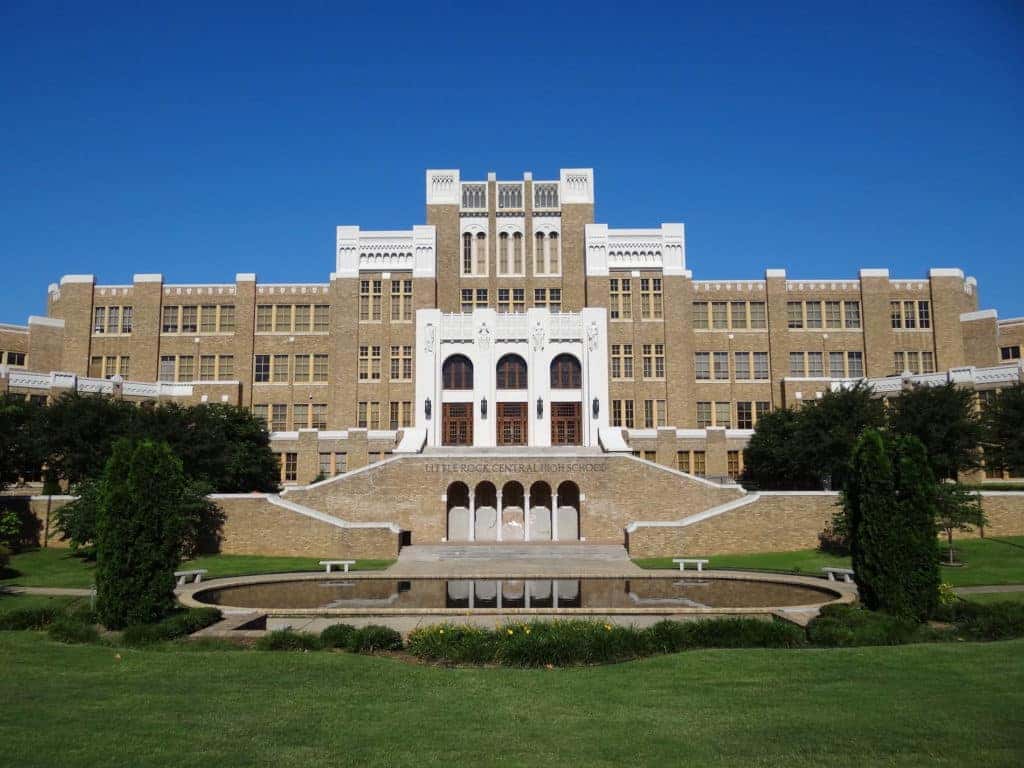
When Little Rock Central High School was built in 1927, the American Institute of Architects named it “The Most Beautiful High School in America.” Thirty years later, with the 1957 Central High Crisis, the school would become a focal point of the national conversation about race. Today, Central High is the only functioning high school to be located within the boundary of a national historic site. In 2007, in celebration of the 50-year anniversary of the desegregation of Little Rock Central High, Little Rock Central High School National Historic Site Visitor Center opened. Operated by the National Parks Service, the center offers interactive exhibits that take guests through the story of the Little Rock Nine and the struggle to help end racial segregation in the American South. You can visit the Little Rock Central High School National Historic Site Visitor Center from 9:30 a.m.-4:30 p.m. seven days a week. Entry is free, too!
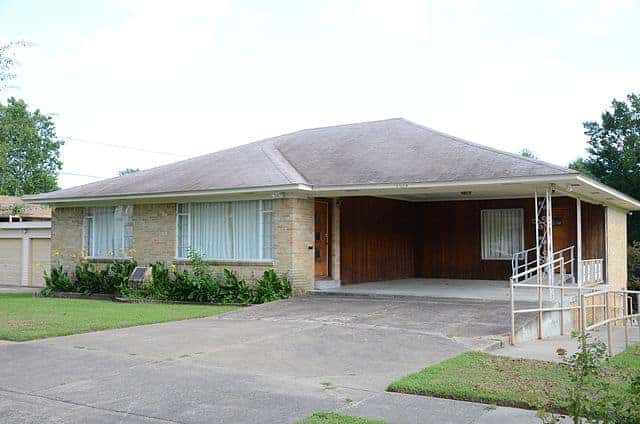
Daisy Gatson Bates was a publisher and influential civil rights activist known for starting “The Arkansas Weekly,” one of the only African-American newspapers dedicated to the Civil Rights Movement. In 1957, Bates was one of the principal organizers of the effort to desegregate Little Rock Central High School, including helping to find, encourage and support the nine brave teens whose families were willing to let them fight segregation head on. Bates’ home, often the target of bomb and arson threats during the 1957 crisis, served as a safe haven to the students and is now a National Historic Landmark. The home is currently being restored as a museum, but you can still see it from the street at 1207 West 28th Street in Little Rock.
Mosaic Templars Cultural Center
The Mosaic Templars Cultural Center is Arkansas’s premier museum of African-American history, containing artifacts, photos and important documents relating to African-American history dating back to before Arkansas was even a state. The museum is housed in the former headquarters of the Mosaic Templars of American organization, a fraternal organization founded by John E. Bush and Chester W. Keatts in 1882 for African-Americans “of good moral character, of every profession, business and occupation.” In 2001, the MTCC was founded as the Mosaic Templars of America Center for African American Culture and Business Enterprise under Act 1176. Though the building was tragically leveled by fire just before its renovation as a museum was scheduled to begin, organizers pressed on and built the structure back as a near-perfect replica of the original. Today, the museum is part of the Arkansas Department of Parks and Tourism museum system, and is dedicated to sharing the story of the African-American experience in Arkansas with permanent exhibitions about the Mosaic Templars of America, the history of Little Rock’s West Ninth Street Business District and the Arkansas Black Hall of Fame.
You can visit the Mosaic Templars Cultural Center at 501 W 9th St., Tuesday through Saturday from 10 am to 4 pm.Or, find them on their website.
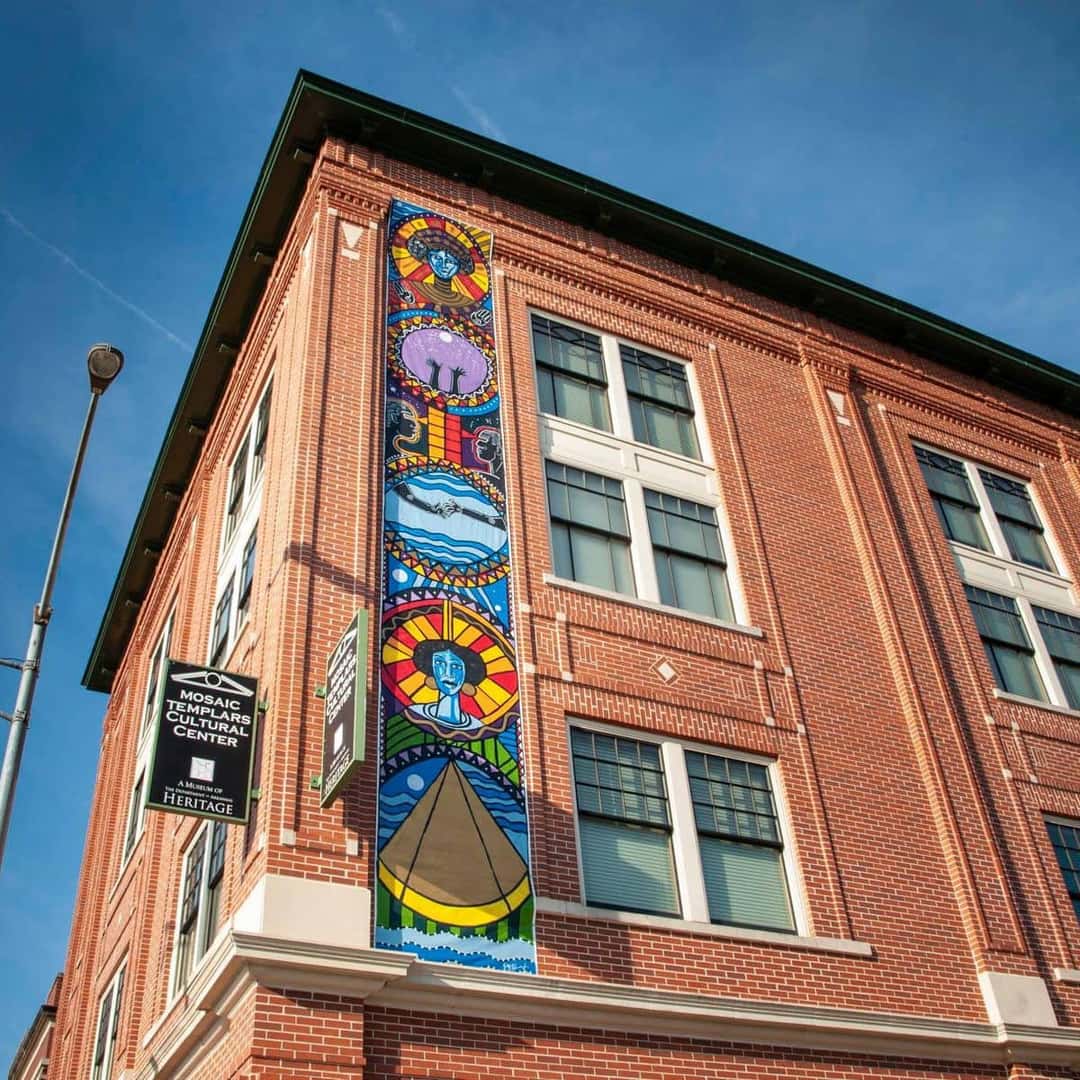
Image from the Division of Arkansas Heritage
Dunbar Junior/Senior High & Memorabilia Room
After Central High School was completed in 1927, Little Rock School Board Member G. DeMatt Henderson, Sr., decided that a new school for Black students should be built. He secured grants from the Julius Rosenwald Fund to fund the construction of what was originally named the “Negro School of Industrial Arts.” Later, the school was named for African-American poet Paul Laurence Dunbar. From 1929 to 1955, Dunbar High School was segregated and was the only black secondary school in Arkansas accredited by the North Central Association for Secondary Schools and Colleges. The memorabilia room hosts artifacts and items from the early years of the school. Learn more about Dunbar Junior High School from the Little Rock School District. While you cannot view the memorabilia right now due to the pandemic, you can view digital files of the collection here.
We at Landers Chrysler Dodge Jeep Ram are grateful to live in a place with such a rich, diverse history. Arkansas history is African-American history, and we must do our best to carry that history with us into the future so Little Rock continues to be a welcoming place for all.
0 comment(s) so far on A Tour of the Civil Rights Sites in Central Arkansas