





Influential African Americans in Automotive History
It’s Black History Month, and Americans everywhere are observing the pivotal roles African Americans have played in the history of the United States. At Landers Chrysler Dodge Jeep Ram, we’re celebrating in our own unique way by highlighting some of the African American pioneers in the automotive industry. From inventors, to racers, to car dealers, African Americans have made great strides in automotive history to make it what it is today. Here are some of the trail blazers that got us here!
Charlie Wiggins
Charlie Wiggins was a race-car driver born in 1897 in Evansville, Indiana. Wiggins spent his childhood shining shoes on the street in front of an auto repair shop. As he grew older, he was invited inside to work on cars and eventually became chief mechanic. In 1922, Wiggins opened his own shop and began building a race car from salvaged junkyard parts. He wanted to compete in the Indianapolis 500, but wasn’t allowed due to his skin color. Wiggins and other African American drivers decided if they couldn’t’ race, they’d create a racing league of their own. They established the “Gold and Glory Sweepstakes,” an annual 100-mile race for black drivers at the Indiana State Fairgrounds. The first race in 1924 drew a huge crowd of 12,000 people and was the largest sporting event for African Americans yet. Wiggins spent his life building cars, training other drivers, and fighting for black participation in motor racing until his death in 1979.
Charles Richard Patterson
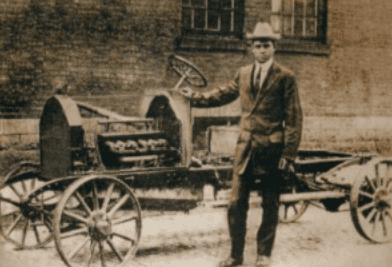
Charles Richard Patterson was born into slavery on a Virginia Plantation in April 1833. In 1862, he escaped to Ohio and found work as a blacksmith for a carriage-building business. In 1873, Patterson partnered with a white carriage manufacturer, J.P. Lowe. In 1893, Patterson bought out Lowe and became the sole owner, renaming the company C.R. Patterson and Sons. In 1910, Patterson died and passed on the business to his son Frederick. Frederick noticed more “horseless carriages” on the roads, and in 1915 C.R. Patterson and Sons produced their first car called the Patterson-Greenfield Automobile. The company became established as a reputable automobile manufacturer, but they couldn’t keep up with Ford’s manufacturing capacity. In 1932, Frederick died, and the company was hit by the effects of the Great Depression. In 1939 they closed production.
Garrett Morgan
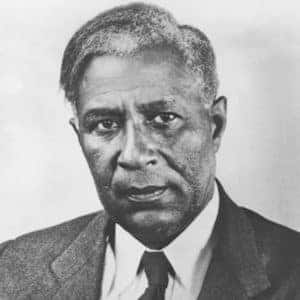
Born in 1877 in Kentucky, Garret Morgan began his career as a sewing machine mechanic with only an elementary school education. Morgan was a talented inventor with a keen eye for detail. He obtained several patents for inventions including an improved sewing machine, a new traffic signal, a hair-straightening product, and a breathing device that later provided a blueprint for World War I gas masks. Morgan made a great contribution to the automotive industry with his invention of a new traffic signal. After witnessing a carriage accident, Morgan acquired a patent for a new type of traffic signal with a warning light to alert drivers to stop. This light was a rudimentary version of the three-light traffic signals seen today. Garrett eventually sold his patent to General Electric for $40,000.
Leonard Miller
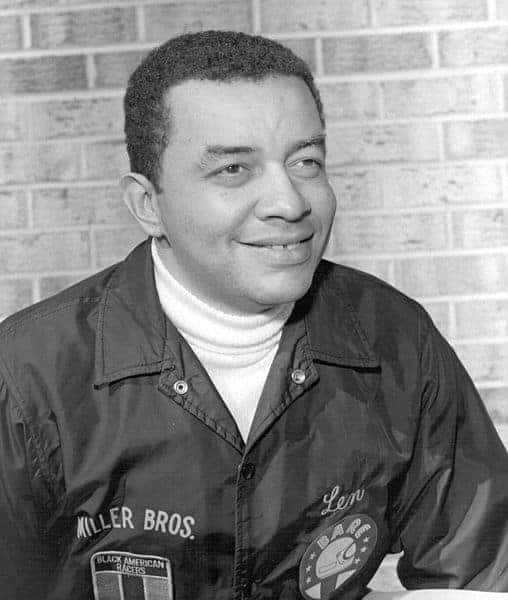
Leonard Miller was born in 1934 and raised in suburban Philadelphia. Miller’s love for cars began in his childhood, and he admitted to secretly working on his parents’ car in his youth. In 1972, Miller formed the Black American Racers Association with Wendell Scott, Ron Hines, and Malcolm Durham. The association was formed to honor black drivers and mechanics in the racing industry, and it grew to over 5,000 members. In 1972, he became the first black owner to enter a car in the Indianapolis 500. Miller later founded Miller Racing Group with his son, and they became the first African American team to win a track championship in NASCAR history, winning the stock car title at the Old Dominion Speedway in Virginia in 2005.
At Landers Chrysler Dodge Jeep Ram, we’re grateful to the many African American inventors, mechanics, and racers that helped to advance the automotive industry. We’re inspired by their determination to overcome adversity, press on, and chase their dreams, ultimately making the racing and auto industry a welcoming and inclusive place for all people regardless of skin color.
0 comment(s) so far on Influential African Americans in Automotive History